Use this list of the best things to do in Washington DC to plan two or three full days around the memorials, the free museums, Capitol Hill and the waterfront. It is written for first-time visitors flying into Reagan National or Dulles who want to see the city well without losing time in lines.
The National Mall and its memorials
The Mall runs from the foot of the U.S. Capitol west toward the Potomac River. Most first days start here, because the big memorials are a walk apart and none charge admission.
Lincoln Memorial and the Reflecting Pool
The Lincoln Memorial chamber and its steps are free and open to the public. Sit on the top steps and you look straight down the Reflecting Pool to the Washington Monument, one of the classic views of the city.
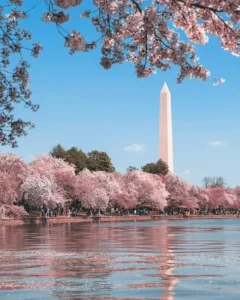
Washington Monument
The monument rises more than 555 feet, and you need a timed-entry ticket to ride the elevator to the observation level. Advance tickets go on sale on Recreation.gov, usually 30 days before the date, and a limited number of same-day tickets are handed out at the monument each morning.
World War II, Vietnam and the Tidal Basin
The World War II Memorial sits beside the Washington Monument in the middle of the Mall. Its fountains are turned off for winter, roughly December through March. The Vietnam Veterans Memorial is close by. Around the Tidal Basin you will find the Jefferson Memorial, with its 19-foot statue of Thomas Jefferson looking out over the water, and the Martin Luther King, Jr. Memorial, which stands next to the Franklin Delano Roosevelt Memorial.
Smithsonian museums
Ten Smithsonian museums line the National Mall, six more and the National Zoo are nearby, and admission is free at every location except Cooper Hewitt in New York. A few favorites:
- National Museum of Natural History. The Hope Diamond, the David H. Koch Hall of Fossils and a North Atlantic right whale replica in the Sant Ocean Hall. No tickets are required. Take the Blue, Orange or Silver line to Smithsonian station and use the Mall exit.
- National Museum of American History. On Constitution Avenue NW, home to the Star-Spangled Banner and Dorothy’s ruby slippers from The Wizard of Oz. No tickets needed.
- National Museum of African American History and Culture. At 14th Street and Constitution Avenue NW. Free timed-entry passes are required for everyone, regardless of age. Reserve up to 30 days ahead, or try for same-day passes, which are released online each morning.
- National Air and Space Museum. At 650 Jefferson Drive SW, entered through the Jefferson Drive doors. Admission is free, but every visitor needs a free timed-entry pass.

The Capitol, Library of Congress and White House
U.S. Capitol
To see the historic rooms you join a free guided tour, which covers the Crypt, the Rotunda and National Statuary Hall. Everyone enters through the Capitol Visitor Center, which sits underground on the east side of the building. Book a time online or walk in for the next available tour, and read the prohibited items list before you go. The Senate and House Galleries are not part of the tour. While you wait, see the plaster model of the Statue of Freedom in Emancipation Hall.
Library of Congress
The Thomas Jefferson Building at 10 First Street SE is free, but you need a free timed-entry ticket. Tickets can be reserved up to 30 days ahead, and same-day tickets are released online at 9 a.m. Eastern. A tunnel from the upper level of the Capitol Visitor Center leads to the Library, so the two pair well in one morning. By Metro, use Capitol South on the Orange, Blue and Silver lines and walk about two blocks north on First Street SE.
The White House
Public tours are free and are requested through your Member of Congress 7 to 90 days in advance. International visitors arrange tours through their embassy. Tours generally run on Tuesday through Saturday mornings, and schedules can change with little notice. Without a tour, the free White House Visitor Center at 1450 Pennsylvania Avenue NW has artifacts from the White House collection and a short film.
Arlington National Cemetery
Across Memorial Bridge in Virginia, the cemetery is open to the public 365 days a year and admission is free. Plan on half a day.
- Changing of the Guard. Held at the Tomb of the Unknown Soldier every hour from October through March and every half hour from April through September. Tomb Guard sentinels from the 3rd U.S. Infantry Regiment guard it 24 hours a day.
- John F. Kennedy gravesite. The eternal flame lit at his funeral in November 1963 still burns.
- Arlington House. Robert E. Lee’s former home sits on the hill above the cemetery and is open for public tours daily.
- Getting there. The Blue Line’s Arlington Cemetery station is steps from the entrance. Guided bus tours leave from the Welcome Center.
Monuments at night
After dark the memorials are lit, the crowds thin out, and the walk from the Lincoln Memorial to the Tidal Basin feels like a different city. The sites stay open 24 hours with no reservations, so you can go on your own. The catch is distance: the Martin Luther King, Jr. Memorial alone is a 15 to 20 minute walk from Smithsonian Metro. If you would rather ride between stops, Alpha Executive Sedan offers a day and night city tour of Washington DC by private car.
Georgetown, the Wharf and the Zoo
Georgetown
Shops cluster where M Street meets Wisconsin Avenue, and the quieter C&O Canal and cobblestone sidewalks are part of the same neighborhood. There is no Metro station in Georgetown. Foggy Bottom-GWU is about a 15-minute walk, and Rosslyn is a walk across the Key Bridge.
The Wharf
Four blocks from the National Mall, the Wharf at 760 Maine Avenue SW is the place for an evening by the water. The Municipal Fish Market, dating back to 1805, is the oldest continuously operating open-air fish market in the United States. The Anthem, a 6,000-seat concert hall, is here too. Water taxis leave from the Transit Pier for Georgetown, Old Town Alexandria and National Harbor from March through December.
National Zoo
The Smithsonian’s National Zoo at 3001 Connecticut Avenue NW is free, but every guest, infants included, needs a free entry pass reserved on the Zoo’s website.
Getting around DC
| Option | How it works | Best for |
|---|---|---|
| Metrorail | Color-named lines. Tap a contactless card, phone wallet or SmarTrip card at the faregate. Fares depend on distance and time of day. | Smithsonian, Federal Triangle and Capitol South for the Mall and Capitol Hill, Arlington Cemetery on the Blue Line, Waterfront on the Green Line |
| Walking | The Mall stretches from the Capitol to the Lincoln Memorial along wide, tree-lined paths. | Museums and memorials in one area |
| Wharf Neighborhood Shuttle | Free, every 10 minutes, linking the Wharf, L’Enfant Plaza Metro and the Mall at 7th Street and Independence Avenue SW. | An afternoon at the museums, then dinner at the Wharf |
| Water taxi | From the Wharf’s Transit Pier, March through December. | Georgetown, Old Town Alexandria or National Harbor |
| Private car by the hour | A driver waits while you visit each stop. | Families, groups and anyone covering Arlington, the Mall and Georgetown in one day |
For a day that crosses the river more than once, hourly car service saves the walk back to a Metro station between stops.
Arriving at Reagan National or Dulles
Reagan National (DCA)
Reagan National is just across the Potomac in Virginia and is the closest airport to DC. Its Metro station on the Blue and Yellow lines connects to the concourse level of Terminal 2, and Terminal 1 is a short walk inside the building. More on the ride into town is in our Reagan airport car service page.
Dulles International (IAD)
Dulles sits 26 miles from DC in suburban Virginia. The Silver Line station connects to the main terminal by an indoor tunnel with moving sidewalks, about 600 feet or a 5-minute walk, and the train takes about an hour to downtown. If you land with bags, kids or a tight schedule, a booked airport transfer from Dulles or Reagan takes you straight to your hotel. Aviation fans can add the Air and Space Museum’s Udvar-Hazy Center in Chantilly, Virginia.

Planning tips
- Reserve the timed passes first: African American History and Culture, Air and Space, the Library of Congress, the Washington Monument and the Zoo.
- Request White House tours as early as the 90-day window allows.
- Visit Arlington in the morning, then cross back to the Mall for the museums.
- Save the memorials for after dinner, when they are lit and quieter.
- Check each site’s own website for the day’s hours, since they change by season.
FAQ
Are the Smithsonian museums really free?
Admission is free at every Smithsonian location except Cooper Hewitt in New York. In DC, the African American History and Culture Museum, the Air and Space Museum and the National Zoo ask for a free timed pass, so book those ahead.
Can you visit the DC monuments at night?
The National Mall memorials are open 24 hours a day, 365 days a year, with no reservations needed. Rangers are on duty until 10 p.m.
How many days do you need in Washington DC?
Three days covers the main sights comfortably. Give one day to the Mall and the memorials, one to the Smithsonian and Capitol Hill, and one to Arlington National Cemetery and Georgetown or the Wharf.
Which airport is closest to downtown Washington DC?
Reagan National (DCA) is the closest, just across the Potomac in Virginia with its own stop on the Blue and Yellow lines. Dulles (IAD) is 26 miles out, and the Silver Line takes about an hour to downtown.
Plan your ride with Alpha Executive Sedan
Your rate and pickup are confirmed before you travel, or see our services.